The latest news relevant to you and your business
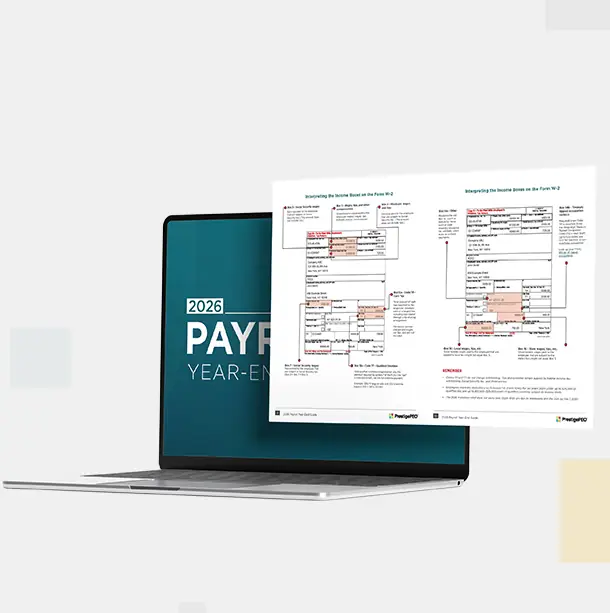
Your 2026 Payroll Year-End & 2027 Minimum Wage Guides Are Here
Year-end brings important deadlines and details to manage, along with new requirements to prepare for in the year ahead.
PrestigePEO’s 2026 Payroll Year-End Guide brings together key payroll deadlines, holiday schedules, bonus and fringe benefit reminders, W-2 and W-4 guidance, and more to help you navigate year-end.
Our 2027 Minimum Wage & Salary Threshold Guide helps you look ahead, providing a convenient reference for reviewing applicable minimum wage rates, tipped wages, effective dates, and salary thresholds across state and local jurisdictions.
Together, these resources can help you wrap up 2026 with confidence and prepare your organization for 2027.

Go Digital: Access Your W-2 Faster and Easier
As year-end approaches, please share this important W-2 reminder with your employees.
Employees are encouraged to enroll in electronic W-2 access through the PrestigePRO Employee Self-Service portal.
Electronic W-2s are typically available two to three weeks earlier than paper forms sent by mail and can be securely viewed and downloaded when needed.
To enroll, employees should:
- Log in to their PrestigePRO Employee Self-Service account.
- Select the Taxes tab, then click W-2.
- Review the Early W-2 Election Terms and Conditions, select the consent box, and click Enroll.
Employees must enroll by December 31, 2026, to receive their W-2 electronically. Employees who previously enrolled in electronic delivery do not need to enroll again.
Employees who have not yet enrolled will also receive reminder emails encouraging them to complete this step before the deadline.
If you or your employees need assistance, please contact your dedicated Payroll Specialist.

2027 Health FSA Maximum Increases to $3,500
The 2027 Health FSA contribution limit has increased to $3,500, with up to $700 in eligible unused funds permitted for carryover.
Employees who previously elected the maximum of $3,400 may increase their election, while benefits-eligible employees who have not yet enrolled have until December 31, 2026, to do so.
Remember, FSA elections do not automatically renew each year. For any questions with updating your FSA elections, please contact your PrestigePEO Benefits Specialist.

Your 2027 Benefits: What’s Next?
A Few Post-Enrollment Reminders
With Open Enrollment complete, now is a good time to help employees prepare for their 2027 benefits. A few important reminders:
- Watch for new ID cards: Employees should be on the lookout for new benefit ID cards and related carrier communications.
- Review benefit deductions: Once the new plan year begins, employees should review their paycheck deductions and report any questions or discrepancies.
- Set up PrismONE ID and access your benefits on the go: Encourage employees to complete their PrismONE ID setup so they’re ready to securely access PrestigePRO and the PrismONE Mobile App. Employees can also download their insurance carrier’s mobile app, when available, for convenient access to digital ID cards, claims, coverage details, and other resources.
- Remember qualifying life event rules: After Open Enrollment, benefit changes are generally limited to eligible qualifying life events, such as marriage, birth or adoption, or loss of other coverage.
- Know where to go for support: Employees with benefits questions should be directed to the appropriate PrestigePEO resources and support channels.
Your dedicated Benefits Specialist also remains available to help your organization navigate the transition into the new plan year.

Make the Move to the PrismONE Mobile App
PrestigeGO Retires December 31. Get Ready with PrismONE
As a reminder, PrestigeGO will retire on December 31, 2026. Encourage your managers and employees to prepare now by downloading the PrismONE Mobile App and completing their PrismONE ID setup if they haven’t already.
PrismONE ID provides the secure login employees and managers will use to access PrestigePRO and the PrismONE Mobile App. Taking these steps now can help ensure continued, convenient access as we transition away from PrestigeGO.

November Compliance Update: What Employers Should Know
As year-end approaches, staying ahead of changing workplace requirements is especially important. Explore this month’s key regulatory developments and compliance updates to help your organization prepare for upcoming requirements, evaluate potential impacts, and head into 2027 informed and prepared.
EEOC Rescinds Criminal Records Guidance: What Employers Need to Know
On October 28, 2026, the U.S. Equal Employment Opportunity Commission (EEOC) voted 2–1 to withdraw its 2012 Enforcement Guidance on the Consideration of Arrest and Conviction Records in Employment Decisions. The change took effect immediately. It does not change the law and federal, state and local rules on criminal background checks still apply.
2012 Guidance:
For more than a decade, the 2012 guidance was the EEOC’s main resource on how employers should use criminal history in hiring. It encouraged employers to consider three factors, known as the Green factors:
- The nature and seriousness of the offense.
- How much time has passed since the offense or the end of the sentence.
- The nature of the job being filled.
It also recommended an individualized assessment, which gives applicants a chance to explain their circumstances before an employer makes a final decision.
What hasn’t changed:
- Title VII still applies. Employers cannot use criminal history as a pretext for discrimination based on race, national origin, sex, or any other protected trait. Background check policies can still lead to claims of intentional discrimination or disparate impact, including from private plaintiffs.
- State and local fair chance laws still apply. About 17 states, the District of Columbia and more than 20 cities and counties have fair chance or “ban-the-box” laws that cover private employers. Many are stricter than the EEOC guidance, with rules on when employers can ask about criminal history, what they can consider, and what notices they must give.
- The Fair Credit Reporting Act (FCRA) still applies. When an employer uses a third-party background check company, it still has to provide disclosures, get authorization, and give pre-adverse action and adverse action notices.
- Current practices can stay in place. The EEOC said employers do not have to drop lawful practices they adopted under the 2012 guidance.
What should employers do:
- Don’t rush to change policies. Withdrawing the guidance does not make previously risky practices safe.
- Review fair chance laws in every location where you hire, including where remote employees work.
- Keep using job-related criteria. Considering the nature of the offense, how much time has passed and the job’s duties is still the best defense against discrimination claims.
- Keep individualized assessments where state or local law requires them and consider keeping them as a best practice.
- Check FCRA compliance with your background check provider, including disclosure forms and adverse action notices.
- Train hiring managers to apply background check policies the same way for every applicant and to document their decisions.
PrestigePEO will continue to monitor developments and share updates as federal, state, and local requirements change. Please reach out to your HRBP with any questions.
Proposed Bipartisan Bill Aimes to Ban Noncompete Agreements for Workers Earning Under $100,000
A new bipartisan proposal in Congress could change how employers use noncompete agreements. On October 22, 2026, Representatives Ro Khanna (D-Calif.) and Anna Paulina Luna (R-Fla.) introduced the Workers’ Right to Compete Act (H.R. 10879). It would prohibit noncompete agreements for workers who earn less than $100,000 a year. The proposed bill is not yet law. It has been referred to the House Committee on Energy and Commerce, and no committee vote has been scheduled.
What the proposed bill would do:
- Set a $100,000 pay threshold. Employers would be prohibited from entering into or enforcing a noncompete with a worker whose expected annual cash compensation is below $100,000. The amount would rise each year with inflation after 2026.
- Count cash pay only. Salary, wages, overtime, commissions, cash bonuses,` and contract fees would count toward the threshold. Equity and stock-based pay would not.
- Reach existing agreements. Prohibited noncompetes would be unenforceable, including ones signed before the law took effect.
- Require written notice. Within 30 days after the law took effect, employers would have to notify current and former workers that their noncompetes cannot be enforced.
- Give enforcement to the FTC and the states. The Federal Trade Commission and state attorneys general would share enforcement.
The bill does not expressly exclude noncompetes executed during the sale of a business, and it does not clearly address non-solicitation agreements. Both points may change if the proposed bill moves forward.
Federal noncompete rules have been unsettled for several years. The FTC’s 2024 rule banning most noncompetes was struck down in court and never took effect, and the FTC has since moved to case-by-case enforcement. Another federal bill, the Workforce Mobility Act of 2026 (H.R. 10215), proposes a broader ban with limited exceptions.
State law still governs most noncompetes today:
- Bans or near-bans: California, Minnesota, North Dakota and Oklahoma.
- Income thresholds: Illinois, Washington, Colorado, Oregon and others allow noncompetes only above a set pay level.
- Other limits: Many states also require advance notice, extra consideration, or limits on how long and how far a noncompete can reach.
What employers should do now
- Inventory your agreements. Identify which employees have noncompetes and note their pay levels and work locations.
- Check state compliance. Make sure current agreements meet the laws of each state where employees work, including income thresholds and notice rules.
- Use narrower protections. Confidentiality agreements, trade secret protections, and reasonable non-solicitation agreements may protect your business with less legal risk.
- Watch the bill. If it gains momentum, employers may need to update templates, send notices and change onboarding practices quickly.
The Workers’ Right to Compete Act is only a proposal for now, but bipartisan support shows continued interest in limiting noncompete agreements for lower and middle-income workers. Reviewing your agreements now will help you prepare for federal or state changes.
PrestigePEO will continue to monitor this legislation and share updates as it develops.
New York Employment Law Updates: What Employers Need to Know
New York and the City of New York have passed several new workplace laws that take effect in late 2026 and early 2027. Here’s a summary, with its effective date.
Construction Reporting Pay Act (Labor Law §§ 196-e and 224-g)
Effective: December 8, 2026
This state-wide law creates new reporting pay and shift cancellation pay rules for employers of construction workers who are scheduled to or report for work. The law requires that employers must pay construction workers who report to work:
- Prevailing-wage projects: at least 4 hours at the prevailing rate, unless the posted prevailing wage schedule sets a higher reporting pay.
- General construction projects: If an employee reports as scheduled but works fewer than four hours, the employer must still pay for four hours, or for the full scheduled shift if it is shorter than four hours, even when no work is available.
- Both project types: at least 2 hours of pay (at the promised hourly wage or prevailing rate, as applicable) when a shift is canceled with less than 12 hours’ notice.
The law was signed September 9, 2026, with a December 8, 2026, effective date. Employers are encouraged to review their scheduling and cancellation practices prior to the effective date.
Opioid antagonists in workplace first aid supplies (Labor Law § 27-f)
Effective: December 12, 2026
New York employers that are federally mandated by OSHA rules to keep first aid supplies “readily available” must also keep an opioid antagonist, such as naloxone (Narcan), on hand at the workplace for first aid or emergency treatment.
Retail Worker Safety Act: panic button requirement (Labor Law § 27-e)
Effective: January 1, 2027
The final phase of the 2025 Retail Worker Safety Act takes effect next year for retail employers. By January 1, 2027, employers with more than 500 retail employees statewide must provide silent response buttons, either installed at fixed, easily accessible points in the workplace or issued to each retail employee as wearable or mobile phone-based devices.
- What the button does: It alerts a security officer, manager or supervisor, not 911.
- Equipment: Phone-based buttons must run on employer-provided devices, and mobile or wearable devices can’t continuously track employees’ locations.
- Training: Employees must be trained on how to use the buttons.
- Already in effect: The Act’s workplace violence prevention policy and training requirements have applied to retail employers with 10 or more employees since June 2025.
Paid Family Leave for union construction workers (Workers’ Comp. Law §§ 203 and 203-c)
Effective: January 1, 2027
New York construction workers who perform construction-type work for several employers under a collective bargaining agreement get a new way to qualify for Paid Family Leave (PFL).
- Eligibility: They qualify with their current employer if they worked the employer’s normal work week for at least 26 of the last 39 weeks for any employer that signed the collective bargaining agreement.
- Union benefits: Union health plan and fund benefits must continue during PFL.
New York City Delivery Worker Deactivation Protections (Int. 1332-A)
Effective: January 17, 2027
Beginning January 17, 2027, NYC app-based delivery services, food and grocery delivery apps, for example, cannot freely deactivate contracted delivery workers, or otherwise block the worker from the related app resulting in the inability to obtain work, functionally firing the worker.
Key requirements:
- Probation period: During a worker’s first 30 calendar days doing deliveries for the service, these protections do not apply.
- Allowed reasons after probation: A delivery service can deactivate a worker only for:
- just cause,
- a bona fide economic reason, or
- when the law requires it.
- Progressive discipline: Services must have a written progressive discipline policy and follow it before deactivating a worker for just cause, except in cases of egregious misconduct.
- Written explanation: Within 72 hours of deactivation, the service must give the worker a written explanation.
- Economic deactivations: Workers get 120 days’ advance notice.
- Right to challenge: Workers can contest a deactivation through the company’s internal process or ask DCWP to investigate.
Next steps for delivery services
- Draft or update the progressive discipline policy.
- Set up the 72-hour notice process.
- Plan economic deactivations at least 120 days ahead.
- Create a process for workers to challenge deactivations.
Employers are encouraged to evaluate the applicability of each law to your business based on industry, size and location. PrestigePEO will continue to monitor these laws and share updates as guidance becomes available.
New York's Trapped at Work Act: New State Guidance Ahead of the December 19 Deadline
In our October Insights, we covered New York’s Trapped at Work Act, which bans most “stay-or-pay” agreements that require employees to repay their employer if they leave a job before a set date. Since then, the New York State Department of Labor (NYSDOL) has issued guidance explaining when the law applies, how it treats agreements already in place, and which repayment arrangements are still allowed. With the law taking effect on December 19, 2026, here is what’s new and what employers should do before the deadline.
Effective Date Confirmed
NYSDOL has confirmed that the Act takes effect on December 19, 2026. This settles earlier questions about whether the February 2026 amendments pushed the effective date to February 13, 2027. Employers should plan around the December date.
Existing Agreements Are Generally Not Affected
The Act applies only to agreements entered into on or after December 19, 2026, and to new or amended terms added to existing agreements on or after that date. A repayment agreement signed before December 19 does not become subject to the Act simply because its retention or repayment period continues past that date. However, amending, renewing, or extending an existing agreement on or after December 19 may bring the new terms under the law, so any changes to current agreements should be reviewed carefully.
Arrangements the Law Does Not Cover
According to the guidance, the Act does not apply to:
- Truly voluntary agreements. If an employee can accept or keep the job without agreeing to the repayment terms, the arrangement is not a condition of employment and falls outside the Act.
- Agreements with third parties. Arrangements between an employee and someone other than the employer (or its agent or assignee), such as a lender’s loan-forgiveness program that depends on continued employment, are not covered.
- Agreements allowed or required by other law. Arrangements permitted or required under another statute or common law remain outside the Act.
Employers should also note that a covered repayment arrangement does not need to be in writing. Informal or verbal understandings can still fall under the law.
Permitted Repayment Agreements: Updated Requirements
The guidance confirms the law’s exceptions and adds detail on how they must be structured:
- Tuition repayment for a transferable credential, which must:
- Be in a written agreement separate from any employment contract;
- Not require the credential as a condition of employment;
- Disclose the repayment amount before the employee accepts, and cap it at the employer’s actual qualifying costs (tuition, fees, and required educational materials);
- Prorate repayment over the required employment period, without accelerating payment upon separation; and
- Waive repayment if the employer ends employment for any reason other than misconduct.
- Property the employee voluntarily purchased or leased from the employer.
- Bonuses, relocation assistance, and other non-educational incentives not tied to specific job performance. Repayment may be required if the employee voluntarily resigns or is terminated for misconduct. It may not be required if the employer ends employment for any other reason, or if the employer misrepresented the job’s duties or requirements.
- Sabbatical leave terms for educational personnel.
- Collectively bargained programs approved by the employer and the employees’ union representative.
What Counts as “Misconduct”
NYSDOL defines misconduct broadly, as behavior that harms the employer’s interests or violates a reasonable work condition. This can include conduct an employer’s own policy defines as “for cause.” Clear, consistently applied for-cause definitions will be important for employers that rely on misconduct-based repayment triggers.
Enforcement and Penalties
The Act does not give employees a private right to sue. Instead, NYSDOL will review complaints and may assess civil penalties of $1,000 to $5,000 per violation. The amount depends on the employer’s size, good-faith compliance efforts, the severity of the violation, and any prior violations. Employees who successfully defend against an employer’s lawsuit to enforce a voided agreement may recover their attorneys’ fees.
Also keep in mind that even a permitted repayment obligation does not automatically allow an employer to deduct the amount from wages or final pay. New York’s wage deduction rules still apply.
What Employers Should Do Now
- Inventory all repayment arrangements, including offer letters, sign-on and retention bonuses, relocation, tuition and training, leave advances, and recurring awards. Flag anything that will be new, amended, or renewed on or after December 19.
- Avoid unintentionally changing agreements signed before December 19, since amendments may bring them under the Act.
- For optional programs, state in writing that participation is voluntary, and confirm employees can decline without any effect on their employment.
- For tuition agreements, use a stand-alone written agreement and document eligible costs, the advance repayment disclosure, the proration schedule, and permitted separation triggers.
- Review bonus and relocation repayment triggers to confirm they apply only to voluntary resignations or misconduct terminations, and align them with your written “for cause” definitions.
- Do not deduct repayment amounts from wages or final pay without confirming compliance with New York’s wage deduction rules.
- Consider alternative retention tools, such as deferred or installment bonuses that are earned over time rather than repaid.
PrestigePEO is committed to helping you stay compliant. If you have questions about how these changes may affect your organization, please contact your dedicated HRBP for support.
Allegheny County (PA) Amends Paid Sick Leave and Adds Paid Parental Leave
On October 22, 2026, Allegheny County Executive Sara Innamorato signed amendments to Article XXIV, now titled Paid Sick and Parental Leave. The regulation changes expand the County’s existing paid sick leave law and create a new paid parental leave requirement. The amendments take effect no fewer than 180 days from passage, which could be as soon as April 20, 2027. Employers will then have an additional 180 days after the effective date to implement the amendments. However, the County has not yet confirmed either date.
The parental leave requirement covers employers with 15 or more full-time or part-time employees. Smaller employers are exempt from parental leave but must follow the new paid sick leave rules.
Changes to Paid Sick Leave
Under the amended law, paid sick leave will cover all employers, regardless of size. Employees will earn one hour of paid sick time for every 30 hours worked in Allegheny County. Employers with 15 or more employees must allow up to 72 hours per calendar year, and employers with fewer than 15 must allow up to 48 hours.
Parental Leave
Covered employers must provide up to 12 weeks of paid parental leave. Employees may use it within one year of a birth, stillbirth, adoption or foster placement. To be eligible, an employee must have worked for the employer for at least 180 continuous days and must work at least 80 hours a year in the County. Part-time employees must also have worked 625 hours. Leave is paid at 100% of the employee’s regular base pay, up to $4,200 per week. Employers may use private insurance to fund the benefit but must pay any shortfall.
Employers may ask for reasonable documentation, such as a birth certificate or adoption or placement papers. They must give the employee a written eligibility decision within 10 business days of receiving a leave request. When leave is foreseeable, employees must give 30 days’ notice.
Additionally, employers must notify employees of their parental leave rights at hire and every year after that. Starting one year after the law takes effect, they must also file an annual certification of compliance with the County. Violations carry fines of up to $100 per day for each violation.
We anticipate the County will provide further guidance soon, we will continue to track developments and provide updates as new information emerges.
California Employment Law Updates
California’s New Limits on Bathroom Surveillance
Beginning January 1, 2027, AB 1331 bars California employers from using workplace surveillance tools to monitor employees inside workplace bathrooms, unless a court orders otherwise.
What Employers Should Know
The definition of a surveillance tool is broad. It can include badge readers, geolocation on company phones, wearables, and time-tracking software that logs idle periods. Employees may leave these devices behind when using the restroom, and employers may not discipline them for doing so. That right does not apply when an employee must remain reachable during a meal or rest period.
Some uses are still allowed. A single entry-and-exit log, such as a badge swipe on a secured restroom door, is permitted, but employers cannot compile the data to track how often or how long someone is inside. Employers may require ID badges or personal safety alarms, provided the device does not record audio or video and has no embedded artificial intelligence.
Violations can result in civil penalties of up to $500 each, enforced by the Labor Commissioner and public prosecutors. The law does not define what counts as a single violation, so exposure at a large site could add up quickly.
Practical Steps for Your Business
- Inventory your tools. Identify every system that collects data near restrooms.
- Turn off duration and frequency reports. Confirm with your vendors that the settings are disabled.
- Check safety devices. Ask vendors in writing whether badges and alarms record audio, video, or use AI.
- Update policies and train supervisors. Never use restroom access data for discipline or performance reviews.
California Broadens Protections Against Immigration-Related Retaliation
Beginning January 1, 2027, California employers face broader liability for workplace conduct tied to a person’s perceived immigration status. AB 2495 amends Labor Code section 1019, which already restricts “unfair immigration-related practices” used to punish workers for asserting their rights.
What Employers Should Know
Existing law prohibits practices such as requiring more or different work-authorization documents than federal law mandates, misusing E-Verify, making or threatening false reports to a government agency, and contacting or threatening to contact immigration authorities. Previously, these rules protected people exercising rights under the Labor Code or a local ordinance. AB 2495 extends that protection to rights under any local, state, or federal law that applies to employees. Protected activity includes making good-faith complaints, asking about legal compliance, and informing or helping others assert their rights. The rules do not cover conduct carried out at the federal government’s express and specific direction.
The law also covers conduct that occurs before any complaint is filed. An employer may be liable for actions or remarks related to perceived immigration status that would reasonably discourage someone from exercising a legal right or pressure them into giving one up, even if the person never follows through. Protection extends to applicants, current employees, and former employees, and a person’s actual immigration status is irrelevant to liability.
Practical Steps for Your Business
- Review your policies. Check anti-retaliation, complaint-handling, hiring, and employment-verification procedures.
- Train recruiters and managers. Immigration-related comments, questions, or threats can create risk even without a formal complaint.
- Audit verification practices. Confirm you request only the documents federal law requires and use E-Verify properly.
- Document your response. Handle any worker concern consistently, and involve HR or counsel before taking action.
California Eliminates Fees for Disability Certification Paperwork
Starting January 1, 2027, California physicians and practitioners will no longer be allowed to charge a fee simply for completing forms that support State Disability Insurance (SDI) or Paid Family Leave (PFL) claims.
What Employers Should Know
AB 2292 bars administrative fees for completing the initial medical certification, for follow-up recertification examinations, and for forms needed to keep benefits going. Providers can still bill for medical care they deliver, and may collect usual copays, coinsurance, or deductibles, as long as those charges match what is charged for a comparable service and are not imposed only to fill out a form.
The law applies to state benefit forms. It does not necessarily extend to separate or custom leave paperwork an employer asks an employee to complete.
Employers are not directly regulated, but the change may make it easier for employees to get the medical documentation they need, which could affect leave and accommodation requests.
Practical Steps for Your Business
- Review leave procedures. Check how your certification and recertification steps work alongside state programs.
- Prepare for more requests. Ensure HR can process documentation promptly and consistently.
- Keep employee guidance current. Make sure materials distinguish state benefit forms from employer forms.
- For more information, see the official announcement here.
California Hospitality Right-of-Recall Law Sunsets
California’s COVID-19 recall requirement for certain hospitality and building service employers expires on January 1, 2027. However, violations that occur on or before December 31, 2026, can still be enforced.
What Employers Should Know
Labor Code Section 2810.8 applies to hotels, private clubs, event centers, airport hospitality operations, airport service providers, and commercial building services. Until January 1, 2027, covered employers must offer open positions, in order of seniority, to qualified employees laid off for COVID-19-related reasons before hiring new employees. Employees qualify if they worked for the employer for at least six months and were laid off on or after March 4, 2020, for a non-disciplinary, pandemic-related reason.
Employers must give written notice of an opening within five business days. The Division of Labor Standards Enforcement may order reinstatement, back pay, front pay, benefits, and civil penalties. Because enforcement continues after the requirement expires, problems that surface later could still lead to liability.
Practical Steps for Your Business
- Keep following the law through December 31, 2026. Continue offering openings in seniority order.
- Audit your records. Confirm notices, offers, and responses are documented.
- Correct any gaps now. Address any missed offers before the law expires.
- Retain documentation. Hold hiring and recall records in case of a later claim.
California Increases Minimum Wage for Certain Agricultural Workers
California agricultural employers that use temporary or seasonal workers face a new wage floor. AB 2646, signed on September 30, 2026, sets a $19.75 hourly minimum for specified farm workers effective January 1, 2027.
What Employers Should Know
The rate applies to “approved agricultural employees,” meaning out-of-state temporary or seasonal workers, such as H-2A workers, approved to work in California. It also applies to “corresponding employees,” meaning California-resident agricultural workers doing the same or substantially similar work for the same employer, in the same county, during the same period. Annual cost-of-living adjustments will follow.
For comparison, the general state minimum wage is scheduled to rise to $17.40 in 2027. Overtime is calculated from the higher rate, so it would be at least about $29.63 per hour once overtime thresholds are met. A higher base rate also increases related costs such as meal and rest period premiums, reporting time pay, and split shift premiums.
Practical Steps for Your Business
- Identify covered workers. Determine who qualifies, with the help of counsel.
- Update payroll and policies. Adjust pay rates, premiums, and wage practices.
- Notify employees. Provide the applicable wage information and post required notices.
- Watch for updates. Follow annual adjustments and any legal challenges.
California Layoff Notices Must Disclose AI-Driven Job Cuts
Starting January 1, 2027, California employers must include new disclosures in Cal-WARN layoff notices when artificial intelligence or other automation causes job losses. The change stems from SB 951.
What Employers Should Know
- Describe automated work. Explain which job functions will be automated.
Existing Cal-WARN rules remain unchanged, including 60 days’ notice and the current coverage thresholds. The new requirements apply when a mass layoff, relocation, or termination results, in whole or in substantial part, from AI or automated technology replacing positions. In those cases, the notice must:
- Identify affected workers. List how many, their job classifications, and their work locations.
- Lead with a statement. “This notice is for a technology displacement” must appear at the top.
- Name the technology. State the category or type of AI or automation involved.
The law uses a broad definition of AI, so everyday workforce software could qualify. The Employment Development Department will publish summaries of these notices, making the information available to the public, unions, and attorneys.
Practical Steps for Your Business
- Document your reasoning. Record the business reasons for any reduction as decisions are made.
- Update your notice template. Add the new required language and elements.
- Map your technology. Know which tools affect which roles.
- Coordinate messaging. Align legal, HR, communications, and investor teams before filing.
- For more information, visit the CA EDD page.
California Notice Rules for Automated Decision-Making Tools
If your business uses software to support hiring, pay, or termination decisions, new California privacy regulations may require you to disclose it. Employers using automated decision-making technology (ADMT) for significant decisions must comply by January 1, 2027.
What Employers Should Know
The California Privacy Protection Agency’s final rules under the California Consumer Privacy Act cover technology that replaces or substantially replaces human decision-making. Covered employment decisions include hiring, promotions, job assignments, compensation, demotions, and terminations. Extensive monitoring of workers, such as video, location, or Wi-Fi tracking, can also trigger additional obligations.
Before using covered technology, employers must provide plain-language notice explaining its purpose and how it works. Employees and applicants may also have the right to opt out in some situations, to appeal to a qualified human reviewer, and to request information about how the tool affected a decision about them. Exceptions exist, including when a trained person with real authority to meaningfully change the outcome reviews each decision.
Practical Steps for Your Business
- List your tools. Identify résumé screeners, scoring software, and productivity monitoring that influence decisions.
- Assess human involvement. Determine whether reviewers are trained and truly able to override results.
- Draft notices and request procedures. Plan how you will handle opt-out and access requests within required timelines.
- Vet vendors. Make sure you can obtain the details needed to explain each tool.
- For more information on California privacy law, visit the California Attorney General’s CCPA page.
California Pay Data Reporting Changes
The California Civil Rights Department (CRD) requires private employers with 100 or more payroll employees, with at least one in California, or 100 or more labor contractors to submit annual pay, demographic, and workforce data. For the 2026 reporting year, reports will be due to the CRD no later than May 12, 2027.
The upcoming reporting cycle brings significant changes in reporting as the pay data reports will shift from the current 10 EEO-1 categories to 23 job categories based on the federal Standard Occupational Classification (SOC) system. Because there is little overlap between the EEO-1 and SOC categories, employers will likely need to reassign nearly every position to a new category. Doing so will require a careful review of job duties, titles, and organizational structure to map each role to the SOC system.
California has also raised the stakes for employers that repeatedly miss their annual pay data filing deadline. Under SB 1237, the maximum court-imposed penalty for a subsequent failure to file increases from $200 to $1,000 per employee. The penalty for a first failure remains at up to $100 per employee.
What Employers Should Know
The law applies to private employers with 100 or more employees, with at least one employee in California, or 100 or more labor contractors. Because penalties are calculated per employee, exposure increases with headcount. A second missed filing for a company with 500 employees could reach $500,000, compared with $100,000 under the old cap. The same increase applies to repeat failures on the separate labor contractor report. Courts also no longer have discretion to excuse non-filing once the Civil Rights Department requests a penalty.
Practical Steps for Your Business
- Confirm coverage. Recheck employee and contractor counts, including those of affiliated entities.
- Prepare for SOC reporting. Ensure your HR systems can map each employee to the new job categories.
- Secure contractor data. Include data-sharing duties and deadlines in labor contractor agreements.
- Assign an owner and a backup. Many missed filings result from turnover or an unassigned task.
- Keep proof of filing. Save confirmations, portal receipts, and agency correspondence.
- Resolve any past non-filing before the next deadline, since a prior failure is what moves you into the higher penalty tier.
PrestigePEO will continue to monitor California reporting requirements and provide further guidance to help clients understand the available reporting data resources and prepare for the annual filing process.
California Solid Waste Contracts and Labor Disputes
A new California law will limit how waste-hauling agreements handle strikes and other labor disputes. SB 1371 takes effect January 1, 2027, and mainly affects local agencies and the companies that serve them.
What Employers Should Know
Force majeure clauses typically excuse a party from performing during events outside its control, such as severe weather. Under SB 1371, a new or substantially amended solid waste franchise contract, license, or permit may not use such a clause to excuse performance during a labor-dispute work stoppage. Existing provisions are void to that extent, no matter when the contract was signed. Traditional protections for natural disasters are unaffected, and the law covers all local agencies, including charter cities.
Supporters, including labor unions, say haulers should remain accountable for service during strikes. Opponents, including major waste companies and some business groups, warned of higher costs and reliability concerns.
Practical Steps for Your Business
- Review your contracts. Waste haulers and local agencies should identify clauses that tie performance relief to labor disputes.
- Plan for contingencies. Prepare service continuity plans for potential work stoppages.
- Revisit pricing and risk. Consider how the loss of this protection affects bids and renewals.
- Coordinate with counsel. Confirm which agreements are covered before renewals or amendments.
California Workplace-Wide Restraining Orders Become Available
Beginning January 1, 2027, California employers will have a stronger option when a threat targets the workplace itself. AB 1961 expands the state’s workplace violence restraining order law, allowing employers to seek protection for an entire worksite or group of employees.
What Employers Should Know
Under current law, an employer’s petition must name the specific employees who were threatened or harassed. AB 1961 changes that. When harassment, unlawful violence, or a credible threat of violence targets a workplace, or employees generally, an employer may seek a temporary restraining order for a reasonably identifiable group or class of employees, without naming any individual as a protected party.
Courts may order the restrained person to stay away from the workplace and avoid contact with it. The Judicial Council has until January 1, 2028, to adopt the court forms needed to implement the law, so procedures may continue to develop.
Practical Steps for Your Business
- Update your workplace violence policies. Reflect this additional remedy.
- Train HR and managers. Make sure they know how to escalate threats directed at a location or team.
- Preserve evidence. Keep records of threatening communications and incidents.
- Consult counsel early. Decide whether a restraining order is the right response before filing.
- Access to official forms and guidance is available through the California Courts Self-Help Guide for Workplace Violence Restraining Orders.
PrestigePEO is here to help. Please reach out to your HR Business Partner for additional guidance or questions related to the upcoming California employment law changes.
California PAGA Claims Are Rising: Is Your Business Ready?
Two years after California overhauled the Private Attorneys General Act (PAGA), claims haven’t slowed. Notices sent to the Labor and Workforce Development Agency (LWDA) are on pace for a record year in 2026, averaging roughly 850 per month. The 2024 reforms gave employers meaningful tools to limit penalties, but those tools work best for businesses that prepare in advance.
Why It Matters
PAGA allows an employee to pursue civil penalties for Labor Code violations on their own behalf and on behalf of other employees who experienced the same violations. The default penalty is $100 per employee, per pay period, plus attorneys’ fees, so even routine pay practices can add up quickly. Health and safety claims are also becoming more common, and healthcare and senior living have seen notable increases in notices.
Limiting Exposure for Employers
Since the 2024 reforms, California employers have several options for limiting PAGA exposure. None applies automatically; each depends on the case facts and the employer’s ability to demonstrate documented compliance efforts.
- Lower starting penalties. The default penalty may drop to $50 per employee, per pay period for isolated violations that don’t recur, and to $25 for certain wage statement errors that don’t confuse or mislead employees.
- Penalty caps for “reasonable steps.” An employer that took all reasonable steps to comply before receiving a notice may limit penalties to 15% of the amount otherwise available. Taking those steps within 60 days of receiving the LWDA notice may support a 30% cap. This makes early, documented compliance work far more valuable than scrambling after a notice arrives.
- Narrower claims. Before the reforms, an employee who experienced one violation could often pursue many others on behalf of co-workers. Now the employee generally must have personally experienced each violation alleged and can represent only co-workers who experienced those same violations. Employers can also challenge whether a case is manageable, and certain stacked penalties are now limited.
There is no official checklist for “reasonable steps.” Reasonableness depends on the circumstances, including the employer’s size and resources and the nature and duration of the alleged violations. Regular, documented compliance work is the best evidence.
What Reasonable Steps Can Look Like
- Audit real practices. Review how meal and rest breaks, timekeeping, and pay actually work at your sites, not just what the handbook says. A one-year lookback is a good starting point for PAGA-focused reviews, and a broader wage-and-hour audit should reach back at least three years. Work with counsel on how the audit is structured, including privilege.
- Keep policies current. Update and distribute wage-and-hour policies and collect employee acknowledgments. Assign someone to own this process.
- Train and document. Train supervisors and employees, and keep attendance records and training materials. If a claim arises, these records help show the employer took reasonable steps.
- Correct and follow through. Fix problems promptly, and address managers who don’t follow policy, such as those who allow off-the-clock work.
- Review common trouble spots. Regular-rate overtime calculations that include bonuses and commissions, worker classification, expense reimbursement (such as personal cell phones and mileage), rounding, off-the-clock work, and wage statement content.
If a PAGA Notice Arrives
A plaintiff generally must wait 65 days after sending the LWDA notice before filing suit, and the 60-day window for the 30% cap begins upon receipt. Contact employment counsel right away, preserve payroll and timekeeping records, and review whether the named employee actually experienced the alleged violations. Employers with fewer than 100 employees have only about 33 days to decide whether to pursue a cure, and a cure can require looking back three years. Larger employers follow a different court-based process. Because deadlines are short, don’t delay building a response plan. Businesses that audit, document, and correct issues now are best positioned to use the reforms’ protections.
PrestigePEO is here to help. For more information, employers may review the LWDA’s PAGA FAQs and consult employment counsel about their specific situation.
Connecticut Expands Paid Sick Leave to All Employers
The last phase of Connecticut’s Paid Sick Leave (Public Act 24-8) takes effect on January 1, 2027, applying to small employers who have one (1) or more employees. Coverage began in 2025 for employers with twenty-five (25) or more employees and expanded in 2026 to those employers who have eleven (11) or more employees. Headcount is based on payroll for the week that includes January 1st.
Employees earn one (1) hour of paid sick leave for every thirty (30) hours they work, up to forty (40) hours per year. Employees who are exempt from overtime are treated as working forty (40) hours a week for accrual. Employees may start using paid leave on their 120th day of employment, for the following reasons.
- Their own or a family member’s illness, injury, medical care, or preventive care.
- Mental health wellness days.
- Workplace, school, or care facility closures during a public health emergency.
- Quarantine after exposure to a communicable illness.
- Needs arising from family violence or sexual assault, such as medical care, counseling, relocation, or court proceedings.
What Employers Should Do Now
- Update or create a sick leave policy before January 1, 2027.
- Provide new hires with the written Paid Sick Leave notice at the time of hire.
- Display the required Paid Sick Leave poster, in both English and Spanish, once it’s published by the state.
PrestigePEO is dedicated to keeping you informed of important workplace developments. If you need assistance understanding or implementing these requirements, please contact your HR Business Partner.
Illinois Changes Reporting Rules for Equal Pay Registration Certificate (EPRC) Filings
Beginning January 1, 2027, the Illinois Department of Labor (IDOL) will require businesses to utilize the revised Equal Pay Registration Certificate (EPRC) CSV template, published in July 2026, that no longer includes a “prefers not to identify” as an option for employee sex or race. Additionally, IDOL has indicated they will reject EPRC submissions that report an employee’s sex or race as “prefers not to identify.”
When Employees Decline to Self-Identify
If an employee declines to give their race, ethnicity or sex, the employer may use employment records or observer identification to report it. Any demographic records the employer keeps should be stored separately from the employee’s personnel file. Employers may upload an explanatory document with the EPRC submission to describe a particular employee’s situation.
Employers that file an EPRC should:
- Download the current CSV template from IDOL before their next filing.
- Write a consistent, documented process for observer identification.
- Keep demographic records separate from personnel files.
PrestigePEO is dedicated to supporting your compliance efforts. Your HR Business Partner is available to assist with questions, provide guidance, and help address your workplace needs.
Illinois Expands Attorney General Workplace Rights Bureau Investigatory Authority
Effective January 1, 2027, HB 4725, signed by Governor Pritzker on July 31, 2026, amends the Attorney General Act to give the Attorney General’s Workplace Rights Bureau broader authority to investigate employers before pursuing an enforcement action. The new investigatory powers will allow the Attorney General to:
- Issue subpoenas for documents and records.
- Require sworn written answers to interrogatories.
- Enter and inspect an employer’s premises and records during normal working hours or at other reasonable times.
- Copy employment records.
- Interview employees and witnesses.
- Ask a court to enforce subpoenas and/or inspections, if an employer refuses to cooperate.
Employer Protections and Limits
The employer must make reasonable efforts to cooperate with the investigation. Knowingly destroying, hiding or altering subpoenaed materials may be charged as a Class A misdemeanor. Employers under investigation by the Attorney General have the right to be represented by counsel. Also, an employer that receives a subpoena, from the Bureau, may file a petition with the applicable circuit court to modify or set it aside.
Records the Attorney General obtains are exempt from public records (Freedom of Information Act) requests. The Attorney General may choose to settle an investigation by agreement with the employer, either before or after filing an enforcement action.
PrestigePEO is dedicated to supporting your compliance efforts. Your HR Business Partner is available to assist with questions, provide guidance, and help address your workplace needs.
Illinois Expands Genetic Privacy Law to Cover Biomarkers
Illinois Public Act 104-0642 amends the Genetic Information Privacy Act (GIPA) so that its protections cover biomarkers and biomarker testing, in addition to genetic information and genetic testing. The amendments take effect January 1, 2027. Biomarker testing means analyzing a person’s tissue, blood or other bodily fluid sample for the presence of a biomarker. Biomarker results now receive the same confidentiality protections GIPA gives genetic test results.
Employers may not solicit, request or require biomarker information or biomarker testing as a condition of employment, including on pre-employment applications. They also may not use biomarker information to discriminate against employees or applicants in hiring, firing, pay or other terms of employment. These are the same restrictions GIPA already places on genetic information. The Act allows employers to release biomarker testing information only in limited, specified circumstances.
GIPA violations can lead to costly litigation. Individuals harmed by a violation may sue for $2,500 per negligent violation or $15,000 per intentional or reckless violation, or actual damages if they are higher. They may also recover attorney’s fees and costs, and the court may order other relief, such as an injunction.
PrestigePEO is dedicated to supporting your compliance efforts. Your HR Business Partner is available to assist with questions, provide guidance, and help address your workplace needs.
Tennessee Lawful Employment Act Expanded to Nearly All Private Employers
Starting January 1, 2027, the Tennessee Lawful Employment Act (TLEA) will cover almost every private employer in the state. The amendment lowers the coverage threshold from six (6) employees to one (1), so any private employer with at least one employee must verify that new hires are authorized to work in the United States. The change applies only to employees hired on or after January 1, 2027.
Employers with 35 or more employees must use E-Verify, as before. Employers with fewer than thirty-five (35) employees may either use the federal E-Verify system, or request and maintain copies of each new hire’s identity and work authorization documents.
What Employers Should Do Now
- Review onboarding and I-9 practices for new hires starting January 1, 2027.
- Choose a verification method: E-Verify, or collecting and keeping work authorization documents.
- Enroll in E-Verify if you choose it or have 35 or more employees.
- Maintain complete records, as they may be requested during a state audit or investigation.
Violations can bring fines of $500 to $2,500 per worker. The state may also suspend a business license. A first or second violation can lead to a temporary suspension, and a third or later violation can lead to a permanent one.
PrestigePEO is dedicated to keeping you informed of important workplace developments. If you need assistance understanding or implementing these requirements, please contact your HR Business Partner.
District of Columbia Paid Medical and Family Leave Program Changes Now in Effect
Washington D.C.’s Universal Paid Leave program has changed. Under the Fiscal Year 2027 Budget Support Act of 2026, the District reduced the number of weeks available for certain types of paid leave and lowered the maximum weekly benefit. The changes took effect October 1, 2026, and affect how much paid leave D.C. employees can receive through the program.
What Changed
For claims filed on or after October 1, 2026, and through September 30, 2030, the maximum leave available is:
| Type of Leave | Previous Maximum | New Maximum |
|---|---|---|
| Family leave (to care for a family member with a serious health condition) | 12 weeks | 6 weeks |
| Medical leave (for the employee’s own serious health condition) | 12 weeks | 10 weeks |
| Parental leave (to bond with a new child) | 12 weeks | 12 weeks (no change) |
| Prenatal leave | 2 weeks | 2 weeks (no change) |
The maximum weekly benefit has also dropped from $1,190 to $1,100. Beginning in 2027, the maximum may increase each October 1 based on inflation in the Washington–Baltimore area, but only if the District’s Chief Financial Officer certifies that the paid leave fund has enough money to support the increase.
Claims filed before October 1, 2026, remain subject to the previous benefit rules. The date a claim is filed, not the date leave begins, determines which rules apply.
What Did Not Change
- Employer contributions. Employers continue to pay 0.75% of covered employees’ wages into the program. The contribution remains entirely employer-funded, and no amount may be deducted from employee pay.
- Parental and prenatal leave. These benefits remain at 12 weeks and 2 weeks, respectively.
- DC Paid Family Leave does not provide job protection. The program’s wage-replacement benefits are separate from job-protected leave available under the federal Family and Medical Leave Act (FMLA) and the D.C. Family and Medical Leave Act, which are not affected by these changes.
What Employers Should Do Now
- Post the most current D.C. Paid Family Leave workplace notice, available from the D.C. Department of Employment Services, and remove outdated versions. PrestigePEO’s online posting portal has been updated to reflect the new notice.
- Update handbooks and leave policies that reference 12 weeks of family or medical leave or a $1,190 weekly maximum.
- Review how D.C. paid leave benefits coordinate with FMLA, D.C. FMLA, short-term disability, and any company-paid leave or salary continuation.
- Let managers and HR staff know that the claim filing date determines which benefit rules apply, so they can answer employee questions accurately.
- If your organization offers supplemental pay to bring employees closer to full salary during leave, consider whether the reduced weeks or weekly maximum affect your program.
PrestigePEO is committed to helping you stay compliant. If you have questions about how these changes may affect your organization, please contact your dedicated HRBP for support.
Washington Expands Pregnancy Accommodation and Paid Lactation Breaks
Beginning January 1, 2027, Washington employers of all sizes must provide pregnancy-related accommodations, and employers must pay for time spent expressing breast milk. The changes stem from SB 5217, which updates the state’s Healthy Starts Act.
What Employers Should Know
Accommodation requirements take effect today for employers with 15 or more employees. The new law applies to any employer with one or more employees, including religious and nonprofit organizations. Lactation breaks must be paid at the employee’s regular rate, and travel time to a lactation location must be paid as well. Employers cannot require employees to use paid leave for this time, and the breaks are in addition to regular meal and rest periods. The list of accommodations now also includes scheduling flexibility for postpartum medical visits.
Enforcement shifts to the Department of Labor and Industries, which will adopt implementing rules and may assess civil penalties. The law also creates a private right of action for employees.
Practical Steps for Your Business
- Update policies. Revise the accommodation and lactation procedures to align with the new coverage and pay rules.
- Configure payroll. Ensure break and travel time are tracked and paid correctly.
- Train managers. Teach supervisors how to handle and document accommodation requests.
- Provide a suitable space. Offer a private location, if available, that is not a bathroom.
- Watch for guidance. Follow rules and resources issued by Labor and Industries.
PrestigePEO is here to help. Contact your PrestigePEO representative with questions about how this change may affect your business.
Washington Fair Chance Act Covers Small Employers
Washington’s amendments to the Fair Chance Act (HB 1747) extend the law’s hiring protections to employers with fewer than fifteen (15) employees starting January 1, 2027. The amendments already took effect for employers with fifteen (15) or more employees on July 1, 2026.
Employers may not ask about an applicant’s criminal record, or run a criminal background check, until after they have made a conditional offer of employment. Employers may not reject an applicant or take other adverse action based on an arrest record or a juvenile record. An employer may consider an adult arrest record if the person is currently out on bail or released on personal recognizance while awaiting trial.
An employer may take adverse action based on an adult conviction record only if it has a documented, legitimate business reason. That reason must be based on the nature of the conviction, the position, business operations, and the other factors the law requires. Before an adverse action may be taken, the employer must:
- give the applicant a pre-adverse action notice that identifies the record it is relying on;
- hold the position open for at least two (2) business days so the applicant may explain the record or provide context; and
- give the applicant a written decision based on an individualized assessment.
If the position requires a post-offer criminal background check or the applicant voluntarily shares criminal history during an interview, employers must provide the applicant with a written summary of their rights under the Fair Chance Act and a copy of the Washington Attorney General’s Fair Chance Act Guide.
Violations of the Act remain enforceable by the General, with penalties ranging from $1,500 to $15,000 for each violation.
PrestigePEO is here to help you stay compliant and prepared for change.

Use PrestigePEO Pulse Newsletter
Keep Your Team Informed with the PrestigePEO Pulse Newsletter
Each December, PrestigePEO shares our annual Pulse Newsletter with your employees, providing timely year-end information, helpful reminders, and resources to help them prepare for the year ahead.
The upcoming 2026 edition will feature important employee-focused updates and resources for year-end.
If you prefer that your employees not receive the Pulse Newsletter, please submit the opt-out form by Friday, December 11, 2026.
No action is needed if you would like your employees to receive it.
Note: Complete the Opt-Out form by Friday, December 11, 2026.

Simplify Your Hiring Process
Recruit Smarter with JazzHR
JazzHR gives growing businesses an easier way to manage recruiting from one place. Post openings, track candidates, collaborate with hiring teams, manage offers and eSignatures, and access reporting, all through a streamlined applicant tracking system available through PrestigePEO.

Take the Work Out of Expense Management
Simplify Expenses with ExpensePath
ExpensePath makes expense reporting easier with a digital solution for capturing receipts, submitting expenses, managing approvals, and connecting with payroll. Give employees a simpler experience while helping your business save time, reduce errors, and maintain greater oversight.

A Great Connection Can Go a Long Way
Know a Business That Could Benefit from PrestigePEO?
If you know a business looking for stronger HR support, competitive employee benefits, payroll expertise, and compliance guidance, introduce them to PrestigePEO. When your qualified referral becomes a client, you can earn up to $2,500, with no limit on the number of referral rewards you can earn.