
The latest news relevant to you and your business


Your Contributions Are Due Tomorrow
September 24, 2026!
We hope your Open Enrollment experience this year has been smooth and that you’ve created the best contribution models for your business. Just a friendly reminder: all elections must be submitted by the applicable deadline. Timely submissions help ensure employees have adequate time to review their benefit options and complete their elections. Email reminders for upcoming deadline dates will also be distributed to help keep you informed and on track.
If you need assistance, our PrestigePEO team is here to help. Contact your dedicated Benefits Specialist or Benefits Account Manager or call our Benefits Team at 833-PEO-BEN1.
You can also visit our Open Enrollment Resource Center for a guided Renewal Portal tour and step-by-step instructions. We’re excited to build on this Open Enrollment season’s success and look forward to our continued partnership.
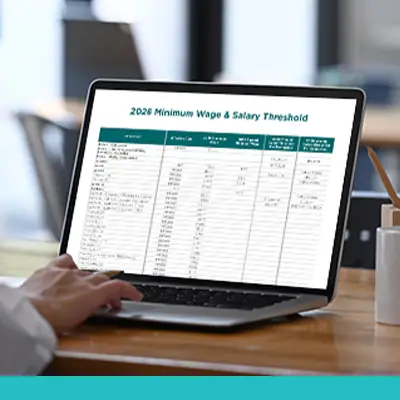
2026 Fall Minimum Wage Updates - Florida
Florida’s minimum wage requirements will change as of September 30, 2025. Employers may need to adjust pay rates to remain compliant.
PrestigePEO is here to make the process easier. We’ve compiled the updated requirements by state and locality for your review.
Review the latest document to confirm any adjustments needed for your workforce. If you have questions, please contact your assigned PrestigePEO Payroll Specialist.

September 2026: Key Compliance Developments for Employers
As the regulatory landscape continues to shift, employers must remain proactive in evaluating workplace policies, operational practices, and compliance obligations. This month’s update provides a concise overview of important developments, emerging requirements, and enforcement activity that may influence how organizations manage risk and maintain compliance moving forward.
The NLRB’s Lead Lawyer Has Identified the Biden-Era Cases She Plans to Overturn
The National Labor Relations Board’s newest General Counsel, Crystal Carey, appointed to a 4-year term in January 2026, has identified the Biden-era decisions she wants the Board to overturn, giving employers insight into likely policy shifts ahead. In an August 26 memorandum, General Counsel Carey outlined targets ranging from severance agreements and workplace rules to captive-audience meetings and card-check bargaining orders.
While the General Counsel can set enforcement priorities, only the Board can overturn precedent. The reconstituted Board recently secured three Republican appointees to the current four-person unit, giving the Board the necessary votes to reassess several Biden-era standards. The Board is traditionally made up of five authorized seats. There is currently one ongoing vacancy. General Counsel Memo 26-04 provides a roadmap of the precedents the General Counsel intends to challenge and the cases that may be used to do so. Until then, current standards remain in effect, and regional offices will continue enforcing existing law.
Precedents currently targeted:
- Severance Agreements (McLaren Macomb): The current rule restricts confidentiality and non-disparagement provisions and can make offering overly broad agreements unlawful. The General Counsel seeks to restore greater employer flexibility.
- Work Rules (Stericycle): Facially neutral handbook policies may be unlawful if employees could view them as limiting protected activity. The General Counsel favors a more balanced standard.
- Captive-Audience Meetings (Amazon.com Services): Employers currently cannot require attendance at meetings where the employer discusses the employer’s view on unionization. The General Counsel wants to reinstate the prior rule allowing mandatory meetings.
- Consent Orders (Metro Health): The General Counsel seeks to expand employers’ ability to resolve cases through consent orders.
- Unionization Predictions (Siren Retail Corp.): The General Counsel wants to broaden what employers may lawfully say to employees about the potential effects of unionization.
- Waiver of Bargaining Rights (Endurance Environmental): The General Counsel supports returning to the “contract coverage” standard, allowing employers more flexibility to act under existing contract language without further bargaining on workplaces changes evidenced by a balanced standard of clear, unmistakable waivers by employees.
Additional precedents General Counsel Carey intends to target have also been identified and are anticipated to be challenged when the opportunity arises. Employers are encouraged to continue complying with current legal obligations but remain prepared to make necessary modifications to workplace practices as needed.
PrestigePEO is here to help. We will continue to monitor these changes and provide updates accordingly.
DHS Adds to the E-Verify Status Change Reports and USCIS Announced Updates Regarding Certain EADs
Over the last year, the Trump administration ended several forms of work authorization, including Temporary Protected Status (TPS) for foreign nationals of Haiti, Venezuela, Afghanistan, Honduras, and Syria; ending the parole for CHNV parolees effective May 30, 2025; and eliminating the 540-day extension for timely filed TPS-related EAD renewals.
In mid-2025, the Department of Homeland Security (DHS) introduced Status Change Reports to notify E-Verify employers when employees’ EADs or work authorization had been revoked. Employers were directed to review the reports, identify affected employees, and terminate employment unless alternative work authorization was provided. The first affected group was CHNV parolees (category C11), many of whom still held facially valid EADs. On August 11, 2026, DHS expanded the report to include invalidated EADs in categories C08, C09, A12, and C19. DHS stated it may invalidate C08 and C09 EADs when a Form I-485 or Form I-589 is withdrawn, approved, or denied, and A12 or C19 EADs when a TPS designation ends. DHS further reminded employers that when an employee’s EAD appears in the report, E-Verify employers must obtain unexpired List A or List C documentation and reverify Form I-9 using Supplement B.
The Status Change Reports do not apply to non-E-Verify employers, a relevant consideration where E-Verify enrollment is not mandatory. The expanded reports will likely most affect industries with higher EAD workforces, including hospitality, construction, agriculture, and aging-related health care.
Additional updates include the U.S. Citizenship and Immigration Services’ (USCIS) recent announcement updating the expiration of certain Employment Authorization Documents (EADs) tied to Temporary Protected Status (TPS) for El Salvador and Ukraine. TPS for El Salvador is currently scheduled to end on Sept. 9, 2026, and TPS for Ukraine is scheduled to end on Oct. 19, 2026.
TPS recipients must have a valid EAD to show proof of work authorization. Many are still awaiting approval of TPS-based EAD applications reflecting the new expiration dates. USCIS has started sending notices confirming that previously expired EADs are extended through the applicable TPS end date. USCIS will send these notices by mail and electronically to TPS recipients with myUSCIS accounts. Employees who receive a notice may present it with their expired TPS-based EAD as proof of continued work authorization.
TPS-El Salvador employees may present:
- An EAD expiring on Mar. 9, 2025; June 30, 2024; Dec. 31, 2022; Oct. 4, 2021; Jan. 4, 2021; Jan. 2, 2020; Sept. 9, 2019; or Mar. 9, 2018; and
- The USCIS notice extending the EAD.
For Form I-9, employers should enter Sept. 9, 2026 in the “Expiration Date (if any)” fields in Sections 1 and 2 and add a note in the “Additional Information” box. Employers may attach the USCIS Alert, the TPS El Salvador Automatic Employment Authorization (EAD) Extension webpage, and the USCIS notice to Form I-9. For E-Verify, employers should use the same Form I-9 expiration date: Sept. 9, 2026.
TPS-Ukraine employees may present:
- An EAD expiring on April 19, 2025, or Oct. 19, 2023; and
- The USCIS notice extending the EAD.
For Form I-9, employers should enter Oct. 19, 2026 in the “Expiration Date (if any)” fields in Sections 1 and 2 and add a note in the “Additional Information” box. Employers may attach the USCIS Alert, the TPS Ukraine Automatic Employment Authorization (EAD) Extension webpage, and the USCIS notice to Form I-9. For E-Verify, employers should use the same Form I-9 expiration date: Oct. 19, 2026.
Employers are encouraged to consult immigration compliance counsel to help maintain compliance. PrestigePEO is here to help and will continue to monitor these changes for updates.
California Considers Updates to Heat Illness Prevention Rules
Cal/OSHA has proposed additional changes to California’s indoor and outdoor heat illness prevention regulations. The revisions aim to align the regulations with state law and strengthen workplace protections against heat exposure. The changes are not yet final and are open for public comment through September 21, 2026.
If adopted, the updates could expand high-heat requirements to more employers with outdoor workers, simplify acclimatization rules for new and returning employees, and require heat illness training to be delivered in a way employees can understand, including consideration of literacy levels and opportunities to ask questions. The proposal would also allow Cal/OSHA to require certain employers to use wearable technology to monitor employees for signs of heat stress while protecting employees’ health information.
Since the revisions are still at the proposal stage, employers are not yet obligated to implement them. Nevertheless, California employers should watch for future developments and be ready to update their heat illness prevention programs once the regulations are finalized.
The current California indoor and outdoor heat illness prevention standards remain in effect while Cal/OSHA reviews public comments and considers whether to adopt the proposed changes.
PrestigePEO will monitor these proposed changes to keep your business informed and ahead of the curve.
Federal Contractors: Affirmative Action Plan Rules Rescinded
Effective October 26, 2026, the U.S. Department of Labor will rescind the regulatory framework of Executive Order 11246, removing the obligation for federal contractors and subcontractors to develop written affirmative action plans based on race and sex. The final rule, one of three contractor-related rules issued that day, was published in the Federal Register on August 21, 2026.
What Is Changing
EO 11246 has for decades required covered federal contractors to maintain affirmative action programs and associated data analyses tied to race and sex. With the framework rescinded, those specific plan-preparation and related recordkeeping obligations administered by the Office of Federal Contract Compliance Programs fall away.
Employers should not read this as a green light to relax core equal-employment compliance. Title VII, the Americans with Disabilities Act, the Age Discrimination in Employment Act, Section 503 (disability) and VEVRAA (protected veterans) obligations, and state and local requirements all remain in place. This change is narrow: it addresses the EO 11246 affirmative-action-plan regime, not the broader ban on employment discrimination.
What This Means for Employers
- If you are a federal contractor, confirm whether and how the rescission affects your current affirmative action plan obligations.
- Continue Section 503 and VEVRAA compliance and all other anti-discrimination obligations, which are unaffected.
- Preserve existing records consistent with other applicable retention rules before changing any process.
- Coordinate any policy changes with counsel, since contract clauses may reference prior requirements.
PrestigePEO is here to help and will continue to monitor these changes for any future updates.
Florida’s Minimum Wage Set to Increase
Effective September 30, 2026, Florida’s minimum wage will increase from $14.00 to $15.00 per hour, while the minimum cash wage for tipped employees increases from $10.98 to $11.98 per hour (with the $3.02 tip credit remaining unchanged). This is the final scheduled increase under Amendment 2, the constitutional amendment approved by Florida voters in 2020 that established annual $1.00 increases until the minimum wage reached $15.00 per hour. Beginning in 2027, future adjustments will no longer follow the fixed schedule and instead will be based on inflation.
What Employers Should Do Now
- Review employee pay rates for workers currently earning near minimum wage and make any necessary adjustments.
- Increase tipped employee cash wages to at least $11.98 per hour and verify that wages plus tips equal or exceed the full minimum wage; employers must make up any shortfall.
- Update workplace minimum wage posters and any internal notices, handbooks, or other compensation materials that reference Florida’s minimum wage.
PrestigePEO is dedicated to supporting your compliance needs with timely guidance and practical solutions. Your HRBP is available to help you understand and address any compliance requirements arising from these changes.
Illinois Limits Driver's License Requirements in Job Postings
Beginning January 1, 2027, Illinois employers, and employment agencies, will face new restrictions on when they may require applicants to possess a valid driver’s license. Under HB 4758, employers may not state in a job posting that a valid driver’s license is required unless driving is an essential function of the position and the requirement is a business necessity. When a driver’s license requirement is justified, employers must include a brief explanation in the job posting describing why the license is necessary for the role.
The new law amends the Illinois Job Opportunities for Qualified Applicants Act and applies to employers with 15 or more employees. Violations may be investigated by the Illinois Department of Labor, and employers may be subject to warnings and penalties under the Act’s enforcement provisions.
What Employers Should Do Now
- Review job descriptions and recruiting templates to identify positions that include driver’s license requirements.
- Remove driver’s license requirements from postings unless driving is truly an essential job function and a business necessity.
- Update hiring and recruiting procedures to ensure compliance with the new requirements.
- Where a driver’s license is required, include a brief statement in the posting explaining the business need for the requirement.
- Coordinate with third-party recruiters and staffing partners to ensure job advertisements comply with the new law.
PrestigePEO is committed to helping you stay informed and prepared for what’s next. If you have questions about how these developments may affect your business, please contact your dedicated HRBP for support.
Illinois Expands Workplace Protections for Menopause-Related Conditions
On August 7, 2026, Illinois enacted the Illinois Menopause Equity and Care Act, amending the Illinois Human Rights Act (IHRA) to provide workplace protections for employees experiencing menopause-related conditions. The law takes effect January 1, 2027, and applies to Illinois employers covered by the IHRA.
What the Law Does
Under the new law, the IHRA’s definition of “pregnancy” is expanded to include menopause-related conditions, including perimenopause, menopause, and associated medical or symptomatic conditions, such as hot flashes, sleep disruption, cognitive changes, mood changes, and osteoporosis-related conditions. The law requires employers to provide reasonable accommodations for menopause-related conditions unless doing so would create an undue hardship. Potential accommodations may include flexible scheduling, modified work hours, additional breaks, temporary job modifications, remote work arrangements, and temperature or climate-adjusted workspaces.
Employers must engage in a timely, good-faith interactive process when responding to accommodation requests; and will be prohibited from discriminating against applicants or employees based on menopause-related conditions.
What Employers Should Do Now
- Review and update equal employment opportunity, anti-discrimination, and accommodation policies.
- Train HR personnel, managers, and supervisors on handling menopause-related accommodation requests and the interactive process.
- Update employee handbooks and workplace notices to reflect employees’ rights regarding menopause-related accommodations.
- Develop procedures for evaluating accommodation requests before the law’s January 1, 2027 effective date.
PrestigePEO is committed to helping with your compliance needs. Please reach out to your HR Business Partner for assistance, guidance, or to discuss any employment-related matters.
Illinois’ Paid Leave for Jury Duty
Effective January 1, 2027, amendments to the Illinois Jury Act and the Jury Commission Act will require certain employers to compensate employees at their regular rate of pay while serving on jury duty.
What the Law Does
Illinois employers, with 25 or more employees, must compensate employees who miss work to report for jury duty at their regular rate of pay. Employees must provide their employer with reasonable notice, defined as within 10 days of the issuance of the jury duty summons. The new law does not require employers with 25 or fewer employees to provide paid jury-duty leave, though employees still retain the legal right to take leave for jury service. Additionally, paid leave for jury duty applies to night shift workers as well who may need to spend their days in jury duty service. The legislation does not specify a maximum amount of paid leave that may be taken for jury service.
What Employers Should Do Now
- Update employee handbooks to reflect the revised jury-duty leave policy, including that eligible employees will receive their regular rate of pay while serving on jury duty.
- Establish documentation procedures for paid jury-duty leave, including how employees should submit summonses, provide notice, and record time away from work.
- Train managers to handle Jury Duty leave requests without adverse action.
PrestigePEO is committed to helping you stay compliant, if you have questions about how these changes may affect your organization, please contact your dedicated HRBP for support.
San Francisco Reduces Employment Requirement for Paid Parental Leave Benefits
San Francisco, California, has revised its Paid Parental Leave Ordinance (PPLO) to simplify employee eligibility for supplemental parental leave pay. The update, signed into law on August 7, 2026, shortens the required employment duration for eligibility.
The PPLO requires employers with 20 or more employees worldwide to provide supplemental pay to eligible employees receiving California Paid Family Leave (PFL) benefits for bonding with a new child after birth, adoption, or foster placement. This supplemental pay helps cover the wage difference between the employee’s regular pay and the state benefit, within set limits.
Under the new law, employees only need 90 days of employment, down from 180 days, to meet the eligibility period. This change aligns the ordinance with other local employment laws and broadens access to paid parental leave benefits for newer staff. Other eligibility criteria remain unchanged: employees must work at least eight hours weekly in San Francisco, perform at least 40% of their work within the city, and qualify for California PFL for child bonding.
The updated requirements take effect on January 1, 2027, for employers with 100 or more employees; employers with 20 to 99 employees have until January 1, 2028, to comply. Companies with fewer than 20 employees are exempt.
Employers should review their leave policies, eligibility rules, and payroll systems to prepare for these changes, as the shorter qualifying period may allow more employees to access supplemental parental leave pay.
PrestigePEO is here to help. Please contact your HRBP with any questions.
South Carolina Enacts Civil Air Patrol Leave Act
Effective October 1, 2026, South Carolina employers must comply with the new Civil Air Patrol Leave Act, which provides job-protected leave for employees who serve as members of the Civil Air Patrol, the official civilian auxiliary of the U.S. Air Force.
What the Law Does
Eligible Civil Air Patrol (CAP) members are permitted to take up to 30 days of leave per calendar year for emergency service operations and up to 10 days per year for CAP training and proficiency activities. Public employers must provide this leave as paid leave, while private employers may provide it as either paid or unpaid leave. Leave is available at the beginning of each calendar year, does not carry over, and must be administered separately from other leave entitlements. Employees are entitled to reinstatement to the same or an equivalent position upon return and are protected from retaliation for exercising their rights under the law.
Notification Requirements
Employees must notify their employer of their Civil Air Patrol membership within 30 days of being hired. When requesting leave, employees should provide advance notice whenever possible, including at least two weeks’ notice for training leave; and must keep their employer informed about the length of any emergency-related absence and their expected return date.
Employers may require documentation verifying an employee’s participation in training or emergency operations and may deny Civil Air Patrol leave to workers classified as essential employees. Additionally, those designated as essential employees must promptly notify their Civil Air Patrol chain of command.
What Employers Should Do Now
- Review and update leave policies and employee handbooks to address Civil Air Patrol leave rights.
- Establish procedures for employees to request leave and submit required documentation.
- Train supervisors and HR personnel on the new leave entitlement and anti-retaliation protections.
- Determine whether any positions qualify for the law’s essential employee exception and document supporting business reasons where applicable.
PrestigePEO is dedicated to supporting your compliance efforts. Your HR Business Partner is available to assist with questions, provide guidance, and help address your workplace needs.
Washington Employers Face New I-9 Notice and Posting Requirements
Washington employers should prepare for new obligations under the state’s Immigrant Worker Protection Act (IWPA), which takes effect on October 1, 2026. The law applies to public and private employers with at least 1 employee in Washington.
Under the updated rules, employers must display the Washington Attorney General’s workplace rights notice in a common area where employee notices are typically posted. They must also provide written notice to employees within 5 business days of being notified of a federal Form I-9 inspection or upon receiving the inspection results.
When an employer is notified of an upcoming I-9 inspection, they must inform employees about the inspection, including details such as the reviewing agency and the records requested. Once the results are in, employees affected by the inspection should also be notified and provided with information on any deficiencies found and options to address them.
The law includes enforcement provisions for employers who fail to meet the notice requirements. Employers may face statutory penalties of $500 per affected worker, with higher penalties for willful violations.
By October 1, 2026, Washington employers must display the required workplace poster, establish procedures for handling Form I-9 inspection notices, and designate a person to communicate employee notices within 5 business days. These steps will help employers comply with the new regulations and avoid potential penalties.
PrestigePEO is here to help you stay compliant and prepared for change. For additional guidance or assistance with workplace policies and practices, reach out to your HR Business Partner.

Know a Business That Could Use a Stronger HR and Benefits Partner?
Every business owner you know is juggling the same challenges: HR complexity, rising benefits costs, and not enough time to manage it all.
If you know a company that could benefit from expert support and a more strategic approach to its workforce, introduce them to PrestigePEO.
It’s simple: refer them, and if they become a client, you’ll earn up to $2,500 per qualified referral with no limit on how many times you can earn.