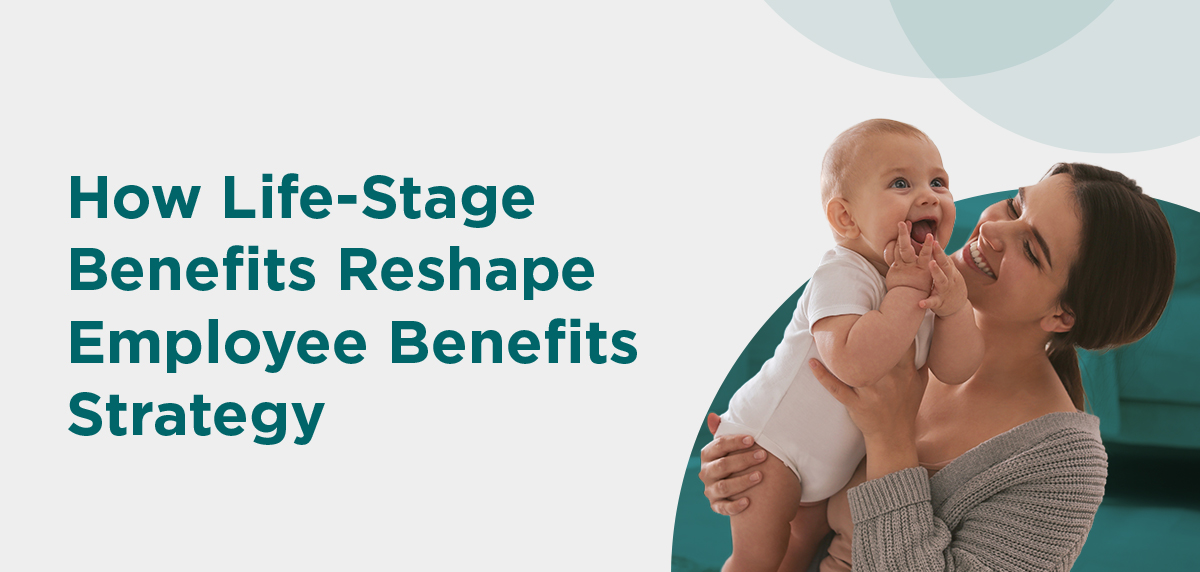
In the current workforce, multiple generations work side by side, each one navigating different realities and goals. Some employees are delaying parenthood while others are starting families; some are caring for aging parents, and some are managing health conditions. Employees’ demographics, family structures, and caregiving responsibilities vary widely, and they’re taking notice of how well their benefits reflect their lives.
Employers and brokers should take note of this, as those who focus on traditional medical coverage alone will miss excellent opportunities to improve employee satisfaction, engagement, and retention. An effective employee benefits strategy accounts for people’s evolving needs, which requires a bigger focus on life-stage benefits.
In this article, you'll learn how to:
- Align benefits with employees’ life stages to better support a diverse workforce.
- Address evolving workforce needs with benefits that support caregivers, growing families, and mental health.
- Evaluate employee benefits offerings using workforce demographics and employee feedback.
- Build a scalable employee benefits strategy that evolves with workers’ needs and business growth.
What Are Life-Stage Benefits?
Life-stage benefits are programs and resources designed to support employees through major personal and family milestones. Life-stage benefits are important retention magnets for growing businesses to offer, as they offer greater value and usage beyond traditional healthcare coverage.
Instead of assuming every employee has the same needs, life-stage benefits acknowledge that a 26-year-old planning a wedding, a 35-year-old navigating fertility treatments, and a 55-year-old caring for an aging parent all need different forms of support from their employers.
Life-Stage Benefits Address Employees' Changing Personal and Family Needs
Common examples of life-stage benefits include:
- Fertility treatment support
- Adoption and surrogacy assistance
- Maternity and parental benefits
- Childcare assistance
- Elder caregiving resources
- Family planning support
- Mental health resources
- Financial wellness programs
- Flexible work arrangements
- Voluntary ancillary employee benefits that complement core medical coverage
When employers offer these targeted, value-driven benefits, they create a more personalized option list that adapts to employees’ needs throughout their careers.
Why Are Fertility and Caregiving Benefits Becoming Important?
As the workforce evolves, the demand for employee benefits that go beyond traditional healthcare offerings is increasing. Fertility and caregiving support are two of the most necessary and sought-after offerings employees are looking for today.
Demographic Shifts Are Expanding Employee Expectations
Employees are increasingly viewing life-stage benefits as part of a competitive employment experience rather than optional perks. Trends such as the ones below are influencing benefits decisions across organizations:
- Employees are starting families later in life: Government data shows that the age at which women have children has been rising since 1970.
- More families are seeking fertility care: WHO data found that one in six people is now impacted by infertility, and in vitro fertilization (IVF), egg freezing, and other fertility treatments are increasing
- More workers are caring for aging parents: 10% of adults say they care for a parent age 65 or older.
- There’s a larger percentage of dual-income households: Caregiving responsibilities for children and aging parents are becoming harder to handle.
- Employees expect employers to support work-life integration: Work-life balance now outranks salary, in some surveys, as employees’ top consideration when job-seeking.
Employers become more competitive when they recognize employees’ life needs and changing priorities, and can respond with personalized employee benefits.
How Should Employers Evaluate Benefits That Support Different Life Stages?
Recognizing the importance of life-stage benefits is only the first step. Employers also need a practical way to determine which benefits will provide the greatest value for their specific workforces.
Build an Employee Benefits Strategy Around Workforce Needs
Before adding or restructuring benefits, employers should look at these factors:
- Workforce demographics: Age ranges, family structures, and career stages are represented across organizations.
- Employee feedback and benefits data: What are employees actually asking for and using?
- Recruiting challenges: Where does the organization struggle to compete for talent?
- Retention priorities: Which roles or teams are most at risk of turnover?
- Budget limitations: What is realistic given the available resources?
- Existing ancillary benefits: What is already offered and where are the gaps?
- Long-term organizational goals: How does the benefits strategy need to scale as the company grows?
From there, employers need to strike the right balance with core medical coverage, voluntary benefits, family-focused benefits, caregiving support, and flexible options. Remember that not all employees value the same offerings equally.

How Do Brokers and PrestigePEO Help Employers Build Relevant Benefits Strategies?
Many organizations put off employee benefits strategy updates because they fear implementation will cost too much. Updates can be affordable, however, while also being well-administered and clearly communicated.
Create Long-Term Value With Personalized Benefits Planning
Brokers and PrestigePEO work together to plan more relevant employee benefits solutions. PrestigePEO and brokers offer these key areas of support:
Assessed Workforce Demographics
Business owners need to know where benefits gaps exist for their specific workforce. What trends are going on with employees? What do they value outside of work? What kind of support would benefit them right now?
Identified New Opportunities
Once an employer understands their employees’ needs, they can come up with meaningful ancillary or voluntary benefits options that align with those needs.
Supported Employee Communication
Employees need to know exactly what’s being offered, how to sign up, and how it will help them. Supported, clear communication is effective and ongoing.
Improved Benefits Administration
Addressing any hiccups in the enrollment process and making it fast and easy for employees to sign up and access information.
Balanced Value and Budget
No company has an unlimited budget to spend on employee benefits. One of the biggest advantages of working with PrestigePEO is getting help maximizing employee value while minimizing spend.
Stay Adaptable to Evolving Workforce Needs
Your workforce isn’t static, and needs change based on economic conditions, work trends, family status, health requirements, and many other shifting factors. It’s very important to adapt employee benefits strategies as needs evolve.
Recognizing all these moving parts, PrestigePEO helps employers and brokers develop scalable employee benefits strategies that combine competitive health plans, ancillary benefits, HR expertise, and administrative support to meet evolving workforce expectations.
Build Employee Benefits That Evolve With Your Workforce
What matters to an employee in an entry-level role rarely looks the same when they’re nearing retirement. A competitive benefits strategy is built to keep pace with that reality, accounting for each life stage that employees are experiencing.
Life-stage benefits give employers a way to personalize offerings based on their unique workforce needs, providing flexibility and meaningful benefits that employees will actually use. Employers and brokers can regularly assess workforce demographics and plan accordingly.
Evaluate benefits that match today’s workforce needs. Contact PrestigePEO to find out more.

Frequently Asked Questions
What Are Life-Stage Benefits?
Life-stage benefits support employees through personal milestones, such as starting a family, caring for children or parents, managing fertility treatments, or planning for retirement. They recognize that not all employees are at the same stage in life and require more personalized planning.
How Are Life-Stage Benefits Different From Traditional Benefits?
Traditional employee benefits typically focus on healthcare and retirement. Life-stage benefits address evolving personal and family needs through programs such as fertility assistance, caregiving resources, family planning benefits, and voluntary ancillary coverage.
Why Are Fertility Benefits Becoming More Popular?
Employees are increasingly delaying starting families, and fertility treatments are becoming more widely adopted. Many employers are thus seeing fertility benefits as a way to improve recruitment, retention, and employee well-being.
Why Is Caregiving Support Important for Employers?
Many employees balance work responsibilities with caring for children, aging parents, or other family members. Providing caregiving support can reduce stress, improve productivity, and strengthen employee retention.
Should Every Employer Offer the Same Life-Stage Benefits?
No. Employers should evaluate workforce demographics, employee feedback, recruiting goals, and budget constraints to determine which benefits are most relevant for their organization.
How Do Ancillary Employee Benefits Complement Life-Stage Benefits?
Ancillary benefits such as life insurance, disability coverage, and critical illness insurance can provide additional financial protection that supports employees during different life stages.
How Can PrestigePEO Help Employers Modernize Their Employee Benefits Strategy?
PrestigePEO helps employers and brokers evaluate workforce needs, develop customized employee benefits strategies, administer ancillary benefits, and provide ongoing Human Resources support that keeps benefits aligned with changing employee expectations.