Beyond simple task automation, agentic AI workflows can recommend actions, complete task sequences, and even initiate processes with minimal human intervention. As these capabilities become more common, employers need to consider where automation makes sense and where human judgment remains essential.
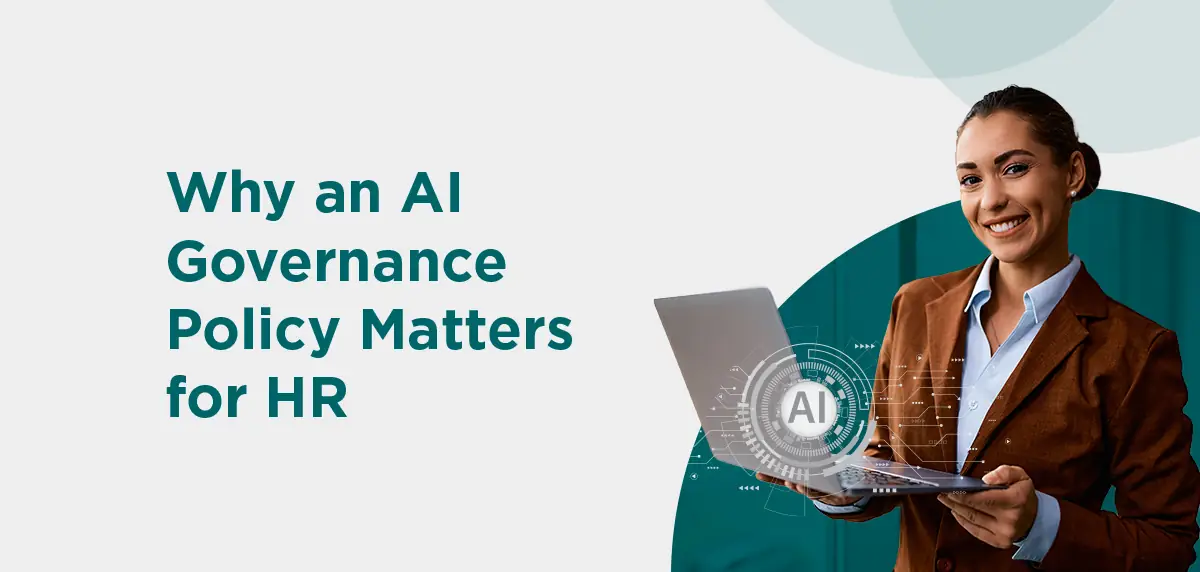
An AI governance policy helps employers establish expectations for how AI is used, what employee information is appropriate to utilize, who is accountable when it influences an HR outcome, and how its use should align with workplace policies and compliance obligations. While AI usage in Human Resources is slowly increasing, SHRM reports that governance is not keeping pace.
Partnering with a Professional Employer Organization (PEO) like PrestigePEO can provide valuable guidance for AI initiatives. Employers don’t have to evaluate these questions on their own; a Human Resources partner can help leadership consider how AI fits into existing policies, compliance practices, and employee-management processes.
In this article, you'll learn how to:
- Identify where AI can improve HR operations
- Decide which Human Resources activities require meaningful human judgment
- Consider when to use employee data
- Identify where AI use intersects with compliance and workplace policies
- Evaluate why human oversight remains important
- Align AI adoption with broader business and workforce goals
What Are Agentic AI Workflows in Human Resources?
Agentic AI workflows coordinate multiple steps within an HR process, recommend actions, and in some cases initiate tasks across different software tools. Unlike traditional automation, agentic AI can respond to changing inputs, coordinate multiple steps, and support more complex workflows.
Agentic AI workflows represent a significant shift from traditional automation. While traditional automation follows predefined rules, agentic AI may coordinate multiple steps, make recommendations, and initiate actions within a workflow.
Examples of agentic AI workflows include:
- Supporting candidate evaluation by organizing applicant information for human review
- Coordinating interview appointments
- Creating onboarding documents
- Responding to common HR inquiries
- Highlighting compliance alerts
- Composing employee messages
- Condensing data
- Directing employee inquiries
However, just because you can automate a workflow doesn’t mean it’s always the best move. The question isn’t simply whether a workflow can be automated; it’s whether it should be.
Which HR Decisions Require Human Oversight?
When it comes to actions such as recruiting and selecting the right candidates, evaluating employee performance, deciding on promotions, setting salaries, handling discipline, managing terminations, and conducting workplace investigations, human judgment is key.
Human judgment is particularly important in decisions involving hiring, performance, promotions, compensation, discipline, termination, and workplace investigations. It is also important when employers are evaluating leave requests, accommodation needs, employee complaints, or workplace disputes.
AI may organize information or identify patterns, but employers should consider whether a decision requires context, empathy, discretion, or knowledge of individual circumstances. An HR business partner will help leadership distinguish between administrative automation choices and decisions requiring meaningful human judgment. The more consequential the decision, the more important it becomes to understand where human oversight belongs.
Why Does an AI Governance Policy Matter for HR?
An AI governance policy for HR helps establish expectations for responsible AI use, including where it can and cannot be used, what level of human oversight it requires, how employee data is handled, and who remains accountable for decisions influenced by it.
Governance may also address transparency, compliance reviews, employee concerns, manager and HR responsibilities, and how employers evaluate AI vendors and technology. The right policy framework will vary based on how your organization uses AI, the types of employee data involved, and any legal requirements.
An HR partner will also help leadership integrate AI governance into existing HR policies and business practices rather than treating it as a separate technology issue. Depending on how an organization uses AI, an AI policy may be incorporated into an employee handbook or maintained as a separate workplace policy. The important consideration is that employees understand how AI should be used, what information can be entered into AI tools, and when human review is required.
How Can an HR Business Partner Help Employers Evaluate AI?
An HR business partner will serve as a bridge between business goals, technology opportunities, employee considerations, and compliance requirements.
Trusted HR advisors help employers:
- Determine which business challenges AI can address and which it cannot.
- Assess how proposed automation might affect employees.
- Pinpoint areas where human judgment is still essential.
- Review current workplace policies.
- Identify compliance issues.
- Consider how automation may affect employee communication, trust, and the overall employee experience.
An HR business partner can also help employers revisit AI-related policies and practices as technology, business needs, and regulatory expectations evolve.
Why AI Governance Should Evolve Alongside Human Resources Technology
Artificial intelligence is changing how employers approach recruiting, employee management, and other HR processes. However, as these tools become more advanced, they raise important questions about fairness, transparency, and accountability. Experts from the Senior Executive HR Think Tank emphasize the need to balance speed with responsibility.
While AI can enhance consistency and lighten the manual workload, it can also magnify existing biases in data or hiring practices if not carefully managed. As more organizations adopt these technologies, the stakes are getting higher. A Harvard Business Review report on AI and fairness in hiring states that companies using algorithmic screening face challenges in ensuring fair and consistent results.
Although AI may speed up decision-making, it also makes transparency and defensibility more important. The solution isn’t to shy away from AI, but to implement it thoughtfully. Clear governance frameworks and meaningful human oversight can help employers use AI efficiently while protecting fairness, accountability, and trust.
How a PEO Partner Can Support Thoughtful AI Adoption
PrestigePEO can help employers evaluate AI-related questions through the lens of HR, compliance, employee management, and business operations.
We assist with:
- HR guidance
- Policy development and review
- Compliance and risk management
- Employee-management guidance
- Insights into HR technology and workflows
- Support for incorporating AI-related guidance into workplace policies
- Ongoing HR consultation as business needs change
While we don’t make legal or technology decisions for employers, we provide HR guidance and coordinated support to help businesses navigate the people and operational considerations of AI adoption.
Move Forward With AI Without Moving Away From Human Judgment
When it comes to AI in Human Resources, the real question isn’t simply about whether to adopt automation. It’s about understanding where automation can help, where it introduces risk, and where human judgment needs to remain part of the process.
As AI becomes more capable, employers need clear expectations for how it affects employees, how data is used, and who remains accountable for outcomes.
PrestigePEO can help employers ask the right questions, identify potential risks, and determine where technology can support effective people management rather than replace it. A clear AI governance policy can provide the guardrails for making those decisions consistently.
Talk with PrestigePEO about building a thoughtful approach to AI in HR.
Frequently Asked Questions About the Benefits Renewal Process
1. What are agentic AI workflows in HR?
Agentic AI workflows can handle many related tasks, make recommendations, or kick off actions within set processes.
2. Which HR decisions should not be fully automated?
When it comes to actions like hiring, setting salaries, providing promotions, handling discipline, holding performance reviews, handling terminations, managing leave, and conducting investigations, it’s crucial to think carefully about where AI fits in. These are areas where context and human judgment really matter.
3. How can employers establish AI governance for HR workflow automation?
To make sure AI is used wisely in HR, it’s a good idea to team up with HR experts and trusted advisors. Together, you can set clear guidelines on how AI should be used, where human oversight is needed, and how to handle data privacy, accountability, and compliance.
4. Why is an AI governance policy important?
An AI governance policy establishes clear expectations for how AI is used, particularly when it involves employee data or influences HR processes. It can help define appropriate uses, human oversight, accountability, and alignment with workplace policies and compliance requirements.
5. Should employers include AI policies in the employee handbook?
Whether an AI policy belongs in an employee handbook depends on how the organization uses AI and what its existing workplace policies cover. An AI policy employee handbook section may address acceptable AI use, employee data, confidentiality, human oversight, and other expectations. HR and compliance professionals can help employers determine whether AI guidance belongs in the handbook, as a separate policy, or both.
6. How can AI improve HR without replacing HR professionals?
AI can cut down on repetitive tasks, organize information, and support certain workflows. But HR professionals are still crucial for providing judgment, context, and empathy, especially when it comes to managing relationships and making important decisions.
7. Why should employers involve an HR business partner when evaluating AI?
An HR business partner can look at AI from both a business and people perspective, considering how it impacts employees, whether it fits into workflows, and how it aligns with policies, compliance, and your company’s goals.
8. How can PrestigePEO help employers evaluate AI in HR?
PrestigePEO gives employers access to experienced HR professionals who can help them consider policy, compliance, employee-management, and operational questions as they evaluate new AI capabilities.