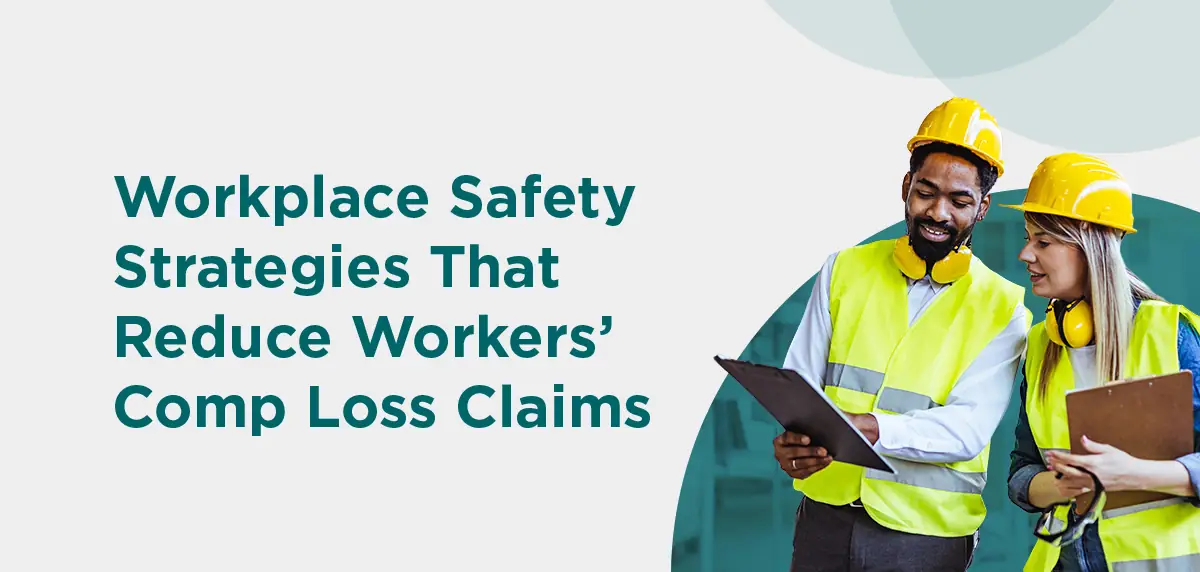
Investing in workplace safety satisfies regulatory requirements and avoids penalties. It also influences everything from injury frequency and productivity to employee morale and long-term workers’ compensation loss claims.
When employers treat safety as a priority rather than a box to check, it leads to fewer disruptions and lowered claims over time. Injuries cause staff disruptions, increased administrative loads, lowered productivity and increased employee stress.
When employers treat workplace safety as an ongoing business priority, they establish a stronger culture and minimize disruptions.
In this article, you’ll learn about workplace safety strategies and how they reduce loss claims, including information on:
- How workplace safety directly impacts workers’ comp loss claims
- Which safety practices reduce claim frequency and severity
- How reporting, documentation, and return-to-work processes affect outcomes
- Why strong safety performance improves loss claim frequency
How Can Employers Lower Workers’ Comp Loss Claims?
Employers can start lowering claims by first reducing the factors that drive them. This can be done by evaluating patterns instead of isolated incidents, and monitoring overall safety performance.
Reduce Injury Frequency and Severity
Preventing injuries before they happen is the most effective way to decrease claims. Fewer incidents lead to fewer claims, less lost work and decreased exposure. Being strategic makes a big impact on the incident rate: The most recent data from the Occupational Health and Safety Administration (OSHA) shows that site-based non-construction organizations that participated in the Voluntary Protection Program (VPP), which promotes worksite-based safety and health management programs, had a Total Case Incident Rate (TCIR) 53% lower than the Bureau of Labor Statistics’ TCIR.
Considering accident severity is also very important, as minor incidents that receive prompt attention and intervention are less likely to develop into claims that involve extended treatment or long periods away from work.
Report Incidents Quickly and Accurately
Delayed reporting can complicate the claims process. Instead, document accidents immediately, which allows you to capture accurate information while the details are clear. Faster reporting also helps employees receive care quicker, while organizations can begin addressing workplace conditions that contributed to the event.
Implement Strong Return-to-Work Practices
Extended absences can cause disruptions. Return-to-work programs provide modified duties or transitional responsibilities, helping employees remain engaged while recovering. Effective return-to-work practices can:
- Reduce lost productivity
- Minimize staffing disruptions
- Support employee recovery
Strengthen Safety Accountability Among Supervisors
Frontline managers influence daily workplace behavior. Employees follow safety expectations that are actively reinforced much more than those written in policy manuals. Supervisors should be responsible for promoting safe work practices, addressing any unsafe behaviors immediately and consistently communicating expectations.
CEO and Founder of Entravia, Kasey Devine, claims that supervisor accountability delivers the highest ROI of any safety initiative – but only if it’s tied to something they care about.
“The real multiplier is when a supervisor knows their safety record affects their bonus and they have actual visibility into what’s happening on their floor.”
Address Recurring Hazards Before Repeat Claims Occur
The most effective workplace safety strategies combine prevention, training and continuous improvement. Safety programs achieve stronger results when they are integrated into daily operations.
What Workplace Safety Strategies Actually Reduce Claims?
Employers reduce accident exposure by prioritizing prevention, response speed and consistent recovery processes. Reducing injuries is the goal, but when they do occur, the right management plan will minimize disruption.
Focus on Habits That Prevent Incidents and Disruption
Certain practices consistently support safer work environments while reducing operational and financial risk. Employers can focus on these high-value workplace safety strategies:
- Regular hazard inspections and corrective action: Regular inspections help organizations identify risks before they contribute to injuries. Any identified hazards should be addressed immediately with follow-up corrective actions.
- Practical OSHA-aligned procedures: Safety procedures work best when employees understand them and can realistically apply them to daily work activities.
- Consistent safety training: Safety training should be a part of onboarding new hires but should also continue regularly as workplace risks evolve, equipment changes or employees take on new responsibilities.
- Ergonomic reviews and equipment maintenance: Ergonomic risks affect workers in offices as well as in physically demanding jobs. Repetitive movements, poor workstation design or awkward positioning lead to strain over time.
- Near-miss reporting and root-cause analysis: Many near-miss incidents could have caused injury or damage but did not result in harm. These are opportunities to analyze to prevent future claims.
- Clear communication around expectations: Employees should understand safety expectations at every level of the organization, and leaders should always set the example for taking accountability for incidents.
Prioritizing these strategies reduces injuries, downtime, turnover and operational friction.
How Does Safety Performance Affect Long-Term Claim Frequency?
Organizations with strong safety performances create more stability over time. Safety trends influence risk evaluation.
Stronger Performance Builds Better Renewal Positioning
When a workplace shows strong safety performance, these are the positive outcomes:
- Lower claims frequency and severity
- More stable renewal conversations
- Stronger workforce morale and retention
- Better productivity and fewer disruptions
- Improved credibility
Safety is an ongoing, long-term strategy and should be prioritized beyond simple compliance in the short term. An experienced Human Resources and compliance partner like PrestigePEO provides access to competitive workers’ compensation coverage, plus prevention resources to help employers reduce injuries and create an overall safer workplace.

How Can I Reduce Preventable Workplace Incidents Right Now?
Immediate strategies include correcting unsafe conditions, increasing hazard awareness in the workplace and ensuring supervisors take accountability.
Is Employee Morale Really Connected to Safety?
Yes, employees who feel protected and supported at work often show stronger engagement, trust and productivity.
How Often Should Employers Conduct Safety Training?
Safety training should be more than a one-time activity at onboarding. It should take place for new hires, when job duties change, after incidents and regularly thereafter, based on specific roles and as needs arise.
Do office-based companies still need workplace safety strategies?
Yes. Slips, falls, ergonomics, repetitive strain and stress-related risks can affect office environments, too.
What are near-misses and why do they matter?
Near-misses are incidents that could have caused harm but didn’t. Tracking them helps prevent future injuries.
Can poor housekeeping increase claim risk?
Yes. Cluttered workspaces, blocked exits, spills and poor maintenance can lead to preventable accidents.
How Can Employers Receive Help with Workplace Safety Strategies?
One of the best ways to find help is to work with PrestigePEO for experienced guidance, prevention resources and workers’ compensation support.
Work With PrestigePEO to Achieve a Safer Workplace and Reduced Workers’ Comp Claims
While many organizations prioritize safety to meet compliance requirements, making it an ongoing priority can lead to fewer claims, higher productivity and better morale. Employers that prioritize prevention, training and continuous improvement create safer environments while reducing long-term claim pressure. Prevention strategies to implement now include training, hazard review, supervisor accountability and continuous improvement.
With PrestigePEO, employers can easily create a safer environment while reducing claim frequency. See how PrestigePEO helps employers improve workplace safety, reduce claims, and build more predictable workers’ compensation outcomes. Contact us today.